

Ice maker sourcing guide
OEM Ice Maker Supplier: Daily Output, Ice Type and Private Label Checklist
Importers should compare more than the product appearance when selecting an OEM ice maker supplier. Daily output, cycle time, ice type, water system, voltage, packaging and certification documents all affect whether a model fits the target market.
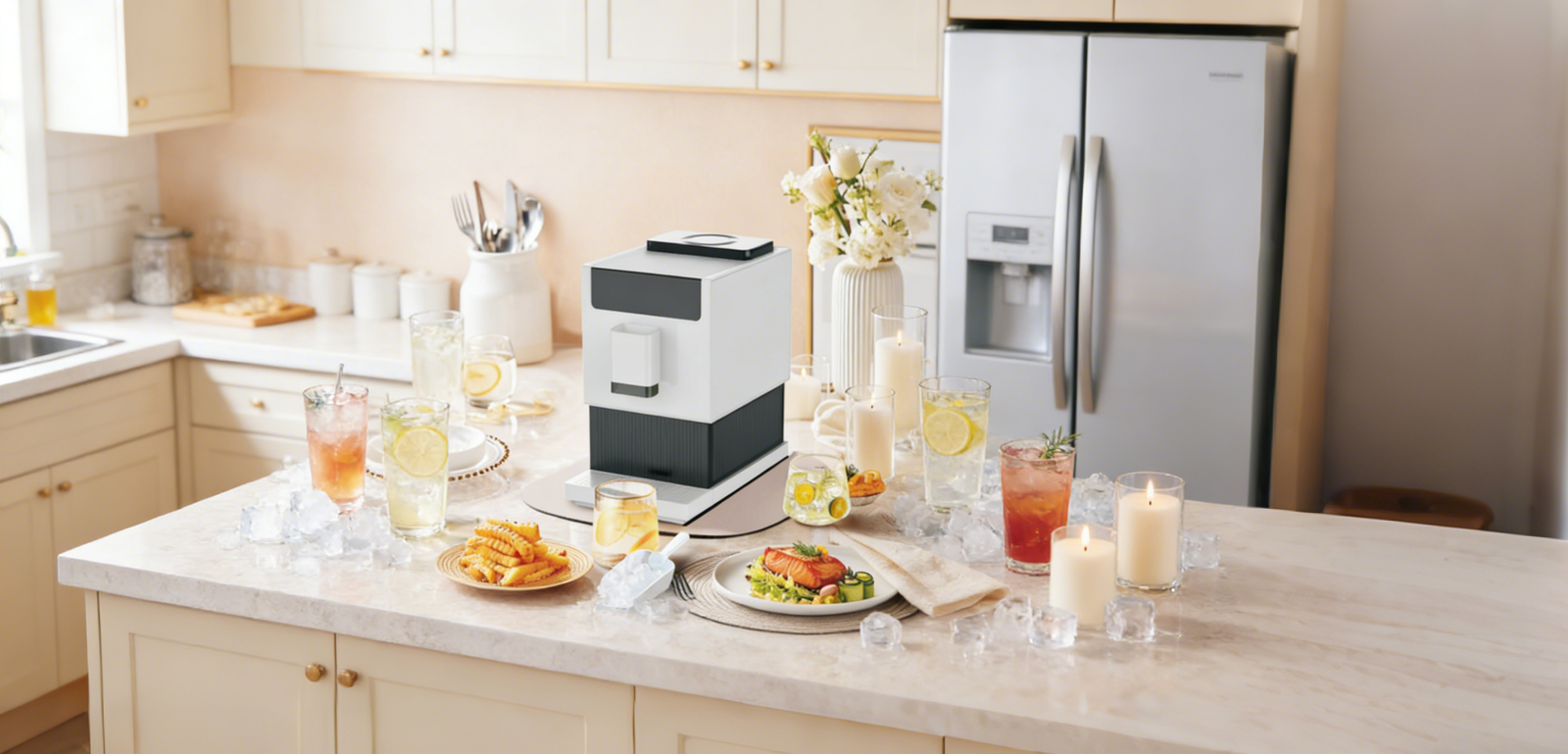
A useful supplier comparison starts with the sales channel. A compact countertop model for household or office use should not be evaluated in the same way as equipment intended for continuous beverage service. Share the expected use scenario before asking for price so the supplier can recommend a suitable model instead of quoting the lowest-cost option.
1. Confirm the target application first
Tell the supplier where and how the ice maker will be used. This affects the required output, machine size, cooling structure and price positioning.
- Household retail: compact size, simple operation, appearance and manageable noise are important.
- Office and hospitality: daily output, water refill convenience and cleaning requirements need more attention.
- Beverage and light commercial channels: cycle time, recovery performance and expected operating hours should be discussed clearly.
- E-commerce projects: packaging protection, carton size, product images and manual quality can influence returns and reviews.
2. Compare daily ice output and cycle time correctly
Daily ice output is normally measured under defined laboratory conditions. Actual production may change with ambient temperature, inlet water temperature, ventilation and operating pattern. Ask the supplier for the test conditions behind the stated output.
Do not compare two models only by the largest number printed in a brochure. Confirm the test environment, ice-making cycle, storage capacity and whether the machine can maintain performance during repeated operation.
3. Check ice type, size and storage
Ice shape affects the target channel and user expectation. Bullet ice, cube-style ice and other formats may require different structures. Confirm whether ice size can be adjusted and how much finished ice the basket can hold before the machine pauses.
4. Review compressor, ventilation and operating environment
The cooling system affects output stability, noise, energy use and service requirements. Buyers should confirm compressor information, refrigerant, ventilation clearance and the recommended ambient operating range. For warm climates, ask whether the selected model has been evaluated under higher ambient temperatures.
5. Confirm electrical configuration for the destination market
Provide the destination country before quotation. The supplier should confirm rated voltage, frequency, plug type and power rather than assuming a standard configuration.
- Rated voltage and frequency.
- Plug type and cable requirements.
- Rated power and energy information.
- Applicable safety and electromagnetic compatibility requirements.
- Label and manual language for the destination market.
6. Define private label and packaging requirements
OEM pricing depends on what needs to be changed. A logo label is different from a customized control panel, housing color or new gift box. Ask the supplier to separate standard product cost from customization cost.
7. Ask for documents before placing a sample order
Document availability depends on the exact model and destination market. Request the relevant files by model number and check that the product identification matches the quotation.
- Available certification reports or certificates.
- Product specification sheet.
- Packaging dimensions, net weight and gross weight.
- Loading quantity where available.
- Spare part list and warranty approach.
- Sample lead time and mass-production lead time.
8. Prepare a quotation request that suppliers can answer clearly
A complete request reduces repeated emails and makes quotations easier to compare. Include:
- Target country and sales channel.
- Interested model or required daily output.
- Expected order quantity.
- Voltage, frequency and plug.
- Preferred ice type and use scenario.
- Logo, color and packaging requirements.
- Required certification documents.
- Target delivery schedule and trade term.
How Whalex Global supports ice maker projects
Whalex Global helps overseas buyers compare models, clarify technical and packaging requirements, coordinate factory communication and prepare quotation details. Explore the current OEM ice maker product page or send us your target market and sourcing requirements.
Prepare an ice maker quotation
Share your target country, daily output requirement, estimated quantity and private label plan.